-
 About
AboutDeeply cultivating the home furnishing industry for 20 years, willing to be a guardian of the home furnishing industry
-
 Product
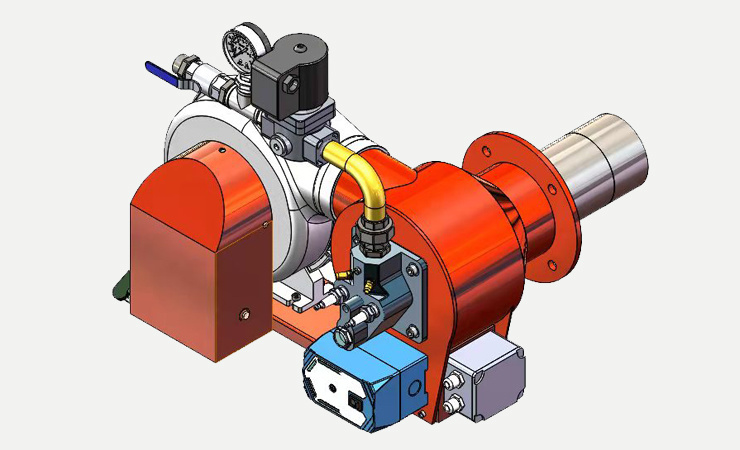
We are a high-tech company that integrates "production", "learning", and "research" to provide you with suitable thermal energy solutions. We specialize in thermal energy combustion equipment, complete sets of furnace combustion automatic control equipment, environmentally friendly flue gas treatment equipment, metal heat treatment equipment, and agricultural food film and leather armor spraying and drying design.
-
-
 Service Support
Our experienced service team quickly understands the actual needs of customers, efficiently designs solutions for enterprises, and manufactures customized high-efficiency, environmentally friendly, and energy-saving combustion equipment.
-
 Blog
BlogExperience in the thermal energy machinery industry for the construction and renovation of combustion equipment
-
 Contact Us
24/7 customer service online, providing consultation, selection, quotation, and emergency problem handling services.

Waste gas treatment Solution
Advantages of the Plan
Introduction to VOCs Exhaust Gas Treatment Systems
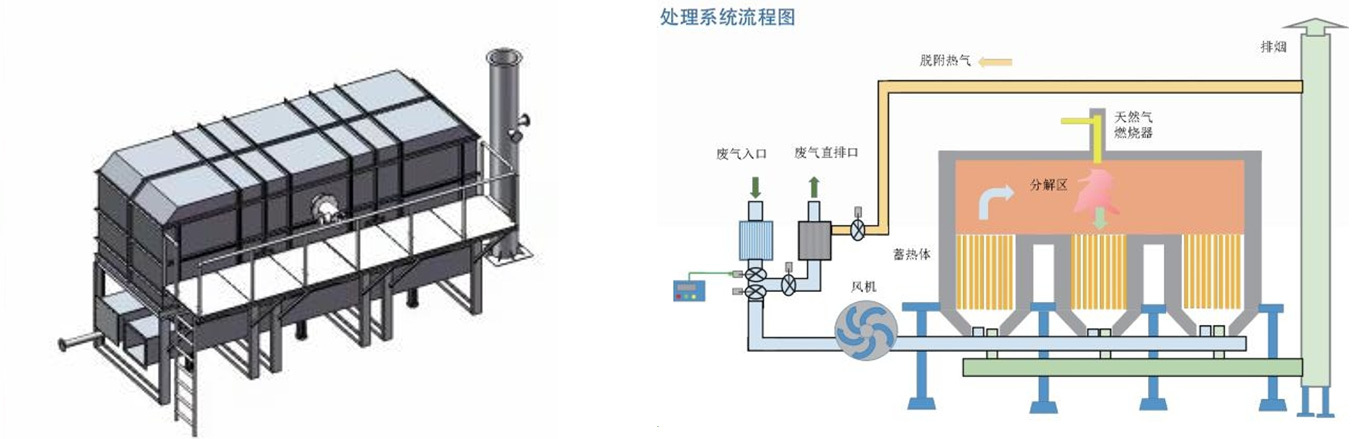
When the organic waste gas treatment system is operating, exhaust gases from various sources are drawn into the pipeline by a negative-pressure fan and then collected into a single stream for processing. After passing through an explosion-proof device, the VOC-containing exhaust gases flow into a three-tower RTO combustion decomposition furnace. The VOC-rich gases first pass through one of the heat-storage towers, where they absorb heat from the thermal storage media, raising their temperature to approximately 800°C. Next, in the combustion decomposition chamber, natural gas burners further heat the gases to an even higher temperature—around 1000°C. Once heated, the harmful gas/combustion flue gas mixture undergoes effective degradation of hazardous substances within the decomposition zone, ensuring emissions meet stringent regulatory standards, while simultaneously releasing some residual heat.
After the combustion reaction is complete, the high-temperature mixed gases then flow through the second heat-storage tower, transferring their thermal energy back to the thermal storage media inside, thereby recovering heat (with exhaust gas temperatures dropping to around 200°C). Finally, the cooled flue gases travel through a dedicated pipe leading to the chimney, where they continue to lose additional heat before being safely discharged into the atmosphere as compliant emissions.
When VOCs exhaust concentrations are high or an emergency occurs, the combustion decomposition furnace shuts down, and the direct emission outlet is opened. The VOCs exhaust gas is purified through an exhaust gas adsorption unit before being directly released into the air. Once the emergency has ended and equipment and system safety have been confirmed, the incinerator burner is restarted. The heated gas is then used to desorb VOCs trapped within the adsorption tower, after which the desorbed gases are fed into the incinerator for complete combustion and degradation. Finally, the resulting flue gas meets emission standards before being discharged.
Product Introduction
Dedicated Integrated Combustion System for RTO/TO/VOCs
Features of RTO/TO/VOCs applications for exhaust gas incineration treatment: Integrated burners, gas pipeline valves, air pipeline valves, and a combustion control cabinet.
TO Furnace Direct-Firing Exhaust Gas Incineration Environmental Protection System Equipment
The industrial direct-fired TO furnace for exhaust gas treatment is an environmentally friendly system device capable of incinerating and burning waste gases.
Classic Case
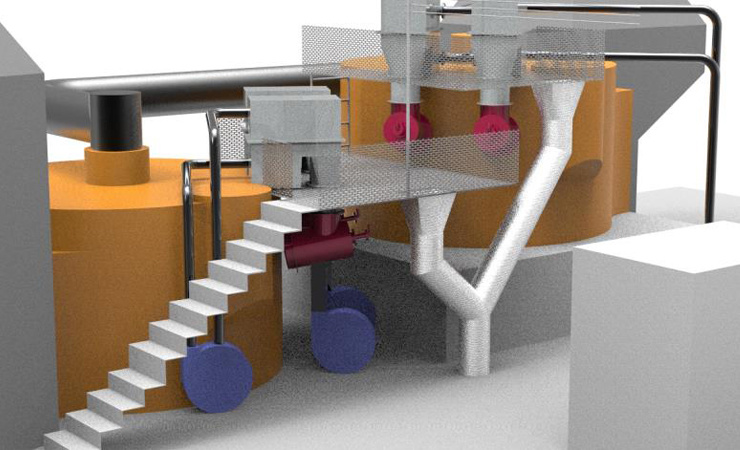
The fresh air used for desorption is first indirectly heated by exchanging heat with RTO flue gas, then further boosted in temperature via a burner to reach the process-set value (approximately 200°C), before being introduced into the rotor's desorption zone for thermal desorption. The desorbed exhaust gas is typically routed to the RTO for incineration and subsequent emission compliance.
Desorption and Heat Replenishment
● The burner features a separate external fan that supplies fresh combustion air.
● The burner body is installed inside the air duct, with the flame direction aligned with the flow of fresh air used for desorption, providing supplemental heating to the hot air intended for desorption.
● The burner design produces a wide, short-flame pattern, and its independent air supply ensures complete and stable combustion, making it ideally suited for regenerative wheel desorption applications that demand high temperature-control precision.
Solution Consulting
Follow us:


You can also submit your information online, and we’ll get back to you within 24 hours!
Contact Information
Company Address:First Floor, Zhangcha Life Science Park, Chancheng District, Foshan City, Guangdong Province
Helpline:+8618123502747
Office phone:+860757-83370984
Fax:0757-85653501
Email:fshongxing.cn@163.com
Website:http://www.fshongxing.cn